5 Oct 2026
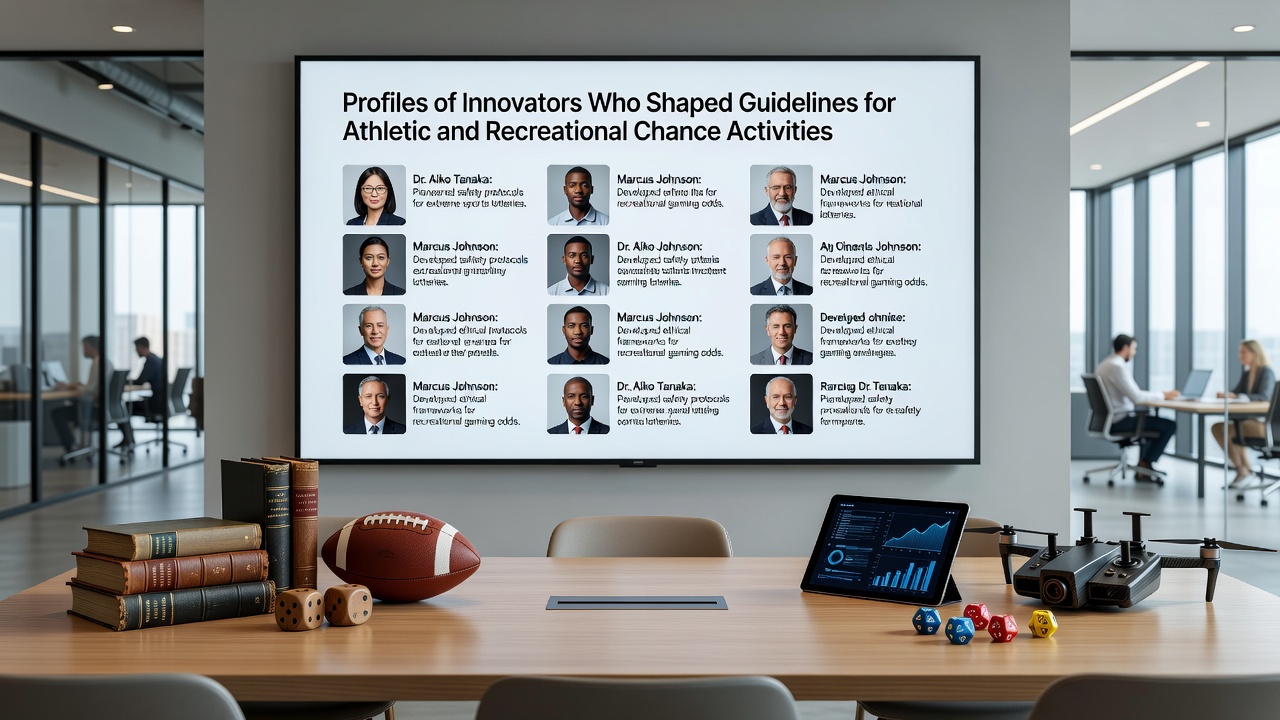
Profiles of Innovators Who Shaped Guidelines for Athletic and Recreational Chance Activities

Guidelines for athletic and recreational chance activities emerged from decades of regulatory experiments across multiple continents, and several individuals played central roles in defining those frameworks through legislation, research, and industry standards. Observers note that the evolution began in the early twentieth century when state and provincial authorities sought to balance revenue generation with public safety concerns in sports wagering and similar pursuits.
Foundational Figures in North American Regulation
One early contributor was Edwin C. Wilson, who worked with Nevada authorities during the 1930s to establish licensing criteria that separated legal sports betting operations from unregulated gambling houses, and his approach influenced subsequent statutes in other western states. Researchers documented how Wilson incorporated financial reporting requirements and venue inspection protocols that later became standard practice in multiple jurisdictions.
Canadian developments followed a parallel path when provincial officials in Ontario collaborated with academic researchers in the 1970s to create oversight mechanisms for parimutuel wagering on athletic events, and data from those programs showed reduced instances of unauthorized betting operations after the new rules took effect. Figures such as policy advisor Margaret L. Tremblay helped draft model legislation that emphasized age verification and revenue allocation toward community sports programs.
European and Australian Contributions in the Late Twentieth Century
Across the Atlantic, Swedish regulator Lars E. Holmberg advanced guidelines during the 1980s that integrated consumer protection measures with taxation structures for recreational betting on football and other athletic contests, and his work provided templates adopted by several Nordic countries. Data collected by government agencies indicated improved compliance rates once operators implemented the required transparency reporting.
Australian researcher Helen K. Patel contributed statistical analyses in the 1990s that shaped national codes for online and venue-based chance activities tied to sports, and her studies linked specific payout structures to patterns of participation that regulators then used when setting operational limits. Those findings prompted coordinated standards among state governments that remain in force today.
Additional profiles include American attorney Richard M. Alvarez, who drafted portions of interstate compact language in the early 2000s that addressed cross-border sports wagering, while Australian economist David J. Chen examined seasonal fluctuations in recreational betting volumes and recommended dynamic reserve requirements that several provinces later incorporated into licensing conditions.
Twenty-First Century Updates and Data-Driven Revisions
More recent innovators drew on large-scale datasets to refine earlier models, and in October 2026 several regulatory bodies plan to review revised protocols that incorporate real-time monitoring tools first proposed by Canadian data specialist Priya N. Sharma. Her frameworks emphasize audit trails for digital platforms that host athletic chance activities, and preliminary trials in two provinces reported measurable decreases in dispute resolution times.
European counterparts have examined similar technologies through working groups coordinated by the European Gaming and Betting Association, while Australian authorities continue to reference Patel's foundational metrics when evaluating new product approvals. Research indicates that jurisdictions adopting combined financial and behavioral oversight elements experience higher operator retention alongside stable tax collections.
Cross-Regional Influences and Ongoing Implementation
Those who study regulatory history observe that ideas often migrated between regions through academic exchanges and industry conferences, and guidelines developed in one country frequently informed revisions elsewhere. For example, elements of Nevada's inspection protocols appeared in later Australian codes, whereas Canadian emphasis on community benefit allocations influenced certain U.S. tribal gaming compacts. According to reports from the Department of Justice Canada, coordinated data sharing among provinces has supported more consistent enforcement across borders.
Industry organizations such as the American Gaming Association have compiled case studies that highlight how individual policy architects adapted prior frameworks to emerging digital environments, and those compilations continue to serve as reference materials for new regulatory staff.
Conclusion
The profiles of these innovators illustrate a pattern of incremental refinement rather than abrupt overhaul, and guidelines for athletic and recreational chance activities reflect accumulated evidence from multiple decades and jurisdictions. Current reviews scheduled for late 2026 build directly on the foundational work of earlier contributors while incorporating contemporary data collection methods, and the resulting standards continue to evolve through ongoing collaboration among regulators, researchers, and operators worldwide.